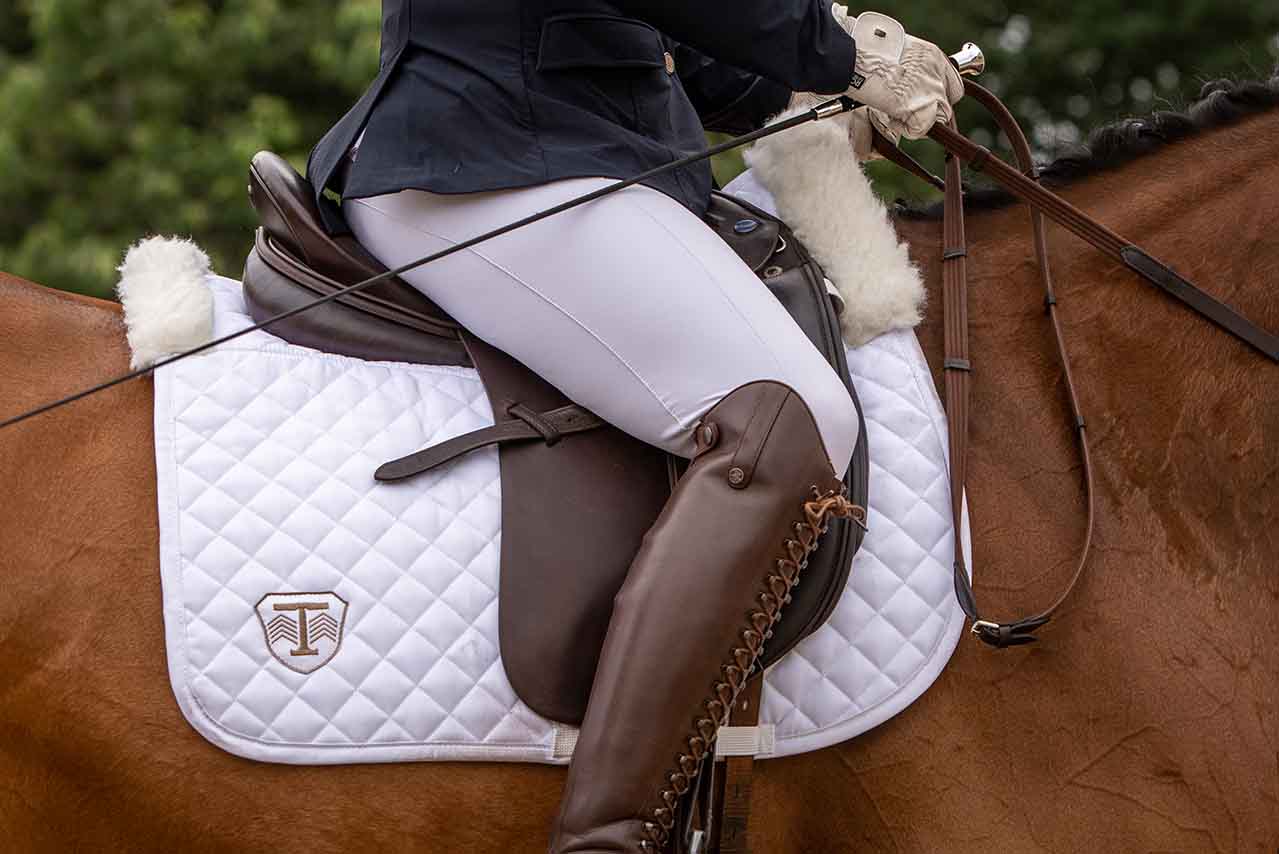
Premium Saddle Pads – What Really Sets Them Apart from Standard Models?
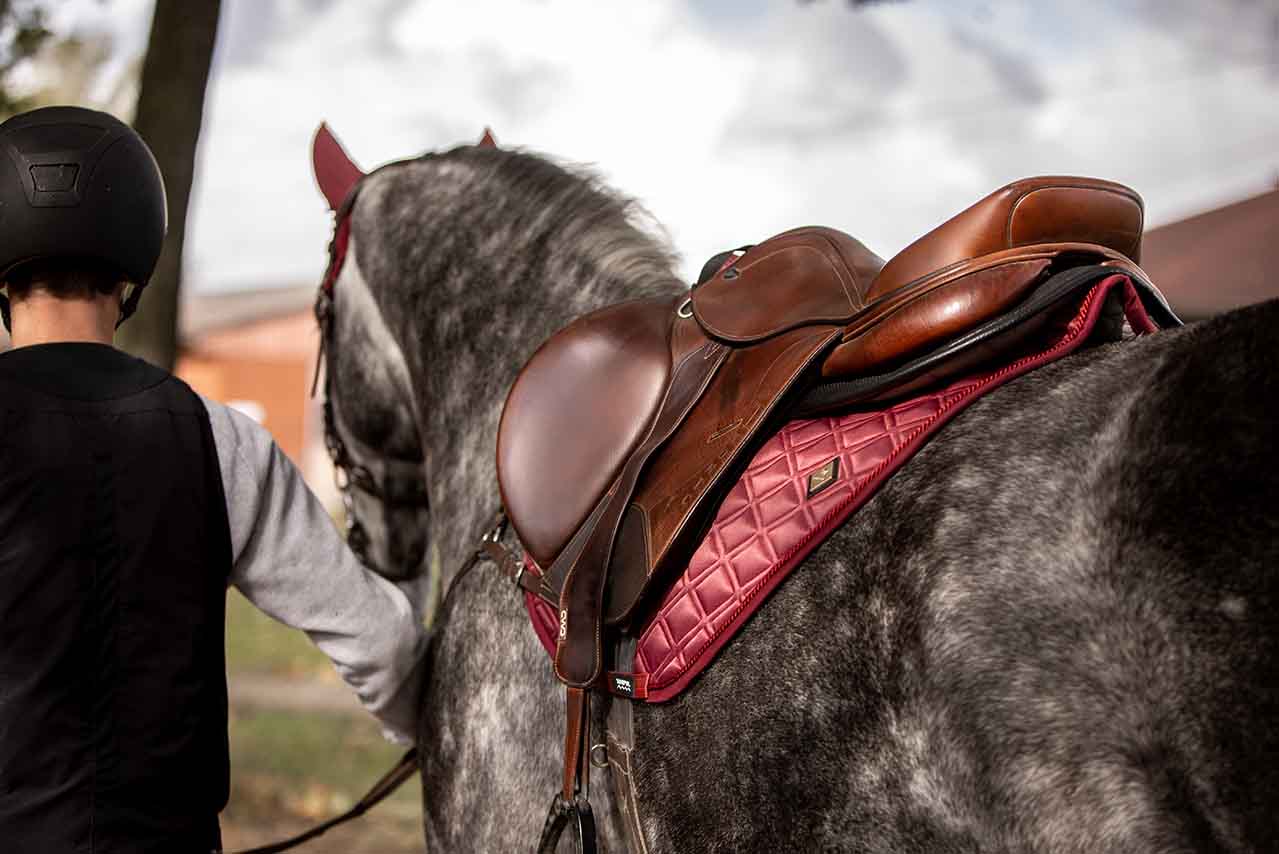
Premium Saddle Pads – What Really Sets Them Apart from Standard Models?
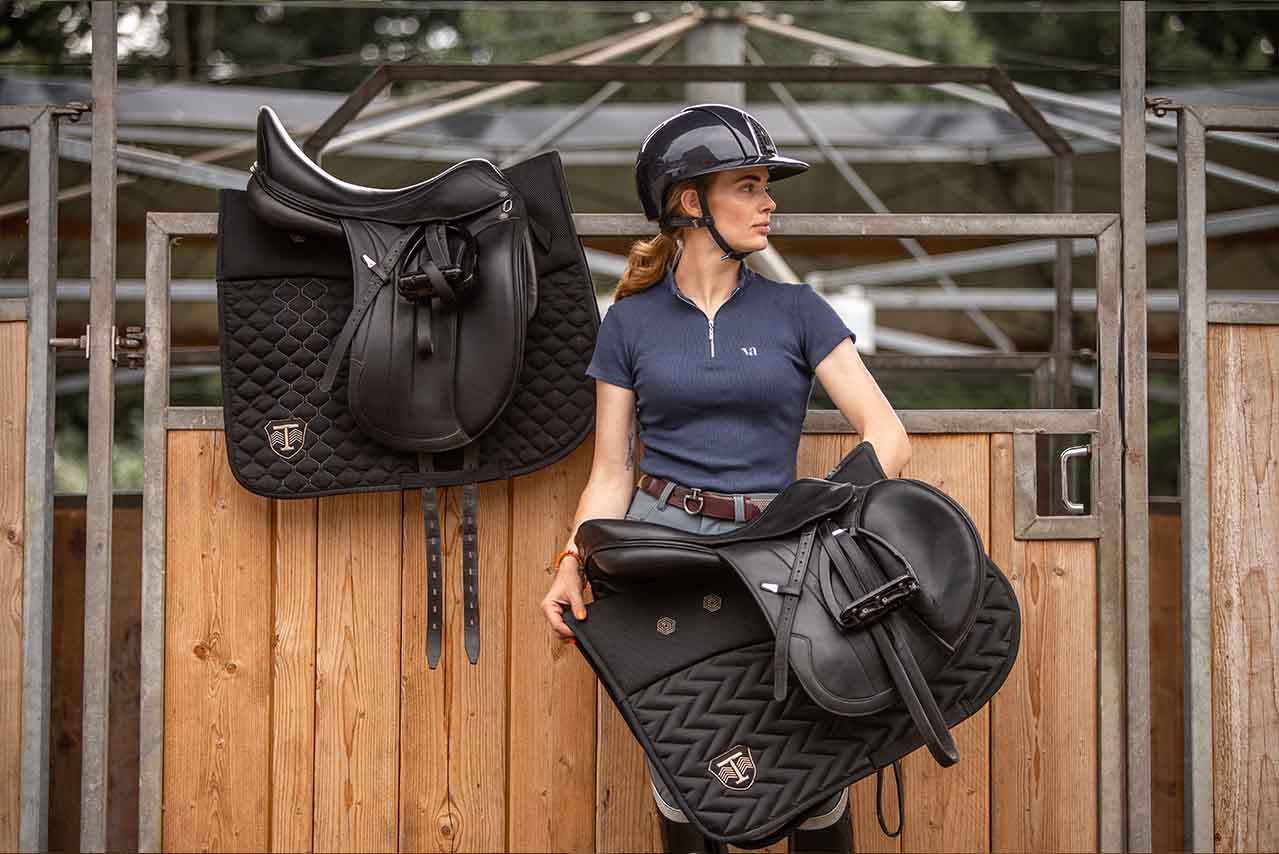
We're returning to the subject of saddle pads because they are one of those pieces of equestrian equipment whose importance is still often underestimated. A saddle pad is frequently seen as an aesthetic accessory or simply a protective layer, yet in practice it has a direct impact on the horse’s comfort, saddle stability, and the quality of movement through the back.
In our previous article, we looked at saddle pads from a general perspective. Now it is time to take a closer look at what truly distinguishes a premium saddle pad from a standard model, and why these differences are not merely cosmetic but functional.
Structure That Works with the Horse
The most important differences between a standard and a premium saddle pad are not related to quilting patterns, colour, or branding. The key lies in their structures - what happens inside the saddle pad.
A premium saddle pad:
· features a multi-layer structure,
· uses layers that each serve a specific technical purpose,
· incorporates filling materials that work with the horse’s anatomy rather than remaining static,
· helps reduce the formation of pressure points,
· improves the stability of both the saddle pad and the saddle itself during movement.
This type of structure is designed with the horse’s biomechanics in mind: how the back moves in walk, trot, and canter, how muscle tension changes during work, and how pressure is distributed beneath the saddle.
In standard saddle pads, the structure is typically much simpler, consisting of one or two layers designed for general use. Such a solution works well for recreational riding but does not fully address the demands of horses in regular, intensive workout.
Materials as the Foundation of Functionality
In premium saddle pads, materials are not selected by chance or simply for their softness. What matters are specific performance characteristics, such as:
· durability and resistance to wear,
· resistance to compression under the weight of the rider and saddle,
· moisture management,
· pressure stability during movement.
Softness is not the goal in itself. It is a technical characteristic that must provide comfort without allowing the saddle to sink or compromising stability.
Standard saddle pads often use materials that initially feel comfortable but quickly lose their shape and flatten over time. As a result, the protection they provide for the horse’s back gradually becomes less effective.
The Key to Breathability and a Dry Back
The underside of the saddle pad, which sits in direct contact with the horse’s back, plays a crucial role in maintaining the proper under-saddle environment.
Standard saddle pads most commonly use traditional cotton or basic synthetic materials that:
· quickly absorb sweat,
· release moisture slowly,
· can create a damp layer against the horse’s back,
· increase the risk of overheating and rubbing.
In premium saddle pads, breathability is not an added feature but one of the core design principles. They use materials and structures that:
· effectively wick away sweat,
· support air circulation,
· help keep the horse’s back dry even during intensive training.
A dry back is not just a matter of comfort. It also helps reduce the risk of skin irritation, chaffing, and excessive muscle tension.
Stability in Motion Matters
A saddle pad that shifts under the saddle, folds, or bunches up in one area can affect the rider’s balance and increase pressure on specific parts of the horse’s back.
In premium models, we place particular emphasis on:
· keeping the saddle pad stable during movement,
· maintaining its position through changes of pace and direction,
· working with the movement of the saddle rather than “fighting” against it.
It is this combination of thoughtful design and carefully selected materials that allows a premium saddle pad to work with the horse, rather than simply sit beneath the saddle.
Anatomical Design – Why It Is More Than a Design Feature
A horse’s back is neither flat nor perfectly symmetrical. That is why premium saddle pads are designed with features such as:
· wither-relief cutaways,
· a contoured topline,
· evenly distributed filling materials.
The anatomical shape allows the saddle pad to better conform to the horse’s body, reduce pressure on sensitive areas, and improve comfort for both horse and rider.
With saddle pads of a more universal shape, the material can sometimes pull against the withers or bunch up beneath the saddle, which may lead to discomfort over time.
Summary – A saddle pad is a work tool, not an accessory
The difference between a standard and a premium saddle pad is not merely a matter of aesthetics. The key factors are:
- a well-thought-out, multi-layered construction,
- materials with specific technical properties,
- effective moisture wicking,
- stability in motion,
- an anatomical fit to the horse’s back.
A standard saddle pad provides basic protection.
A premium saddle pad is a tool that genuinely supports the horse’s comfort and performance.
In the next post, we’ll take a closer look at specific technologies that underpin the functionality of premium saddle pads and their impact on recovery and daily training.
Related articles